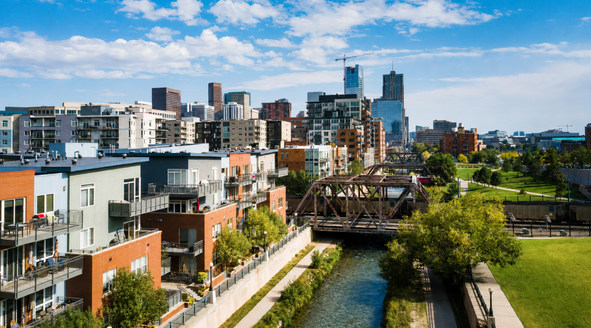
Everything you need to know about Denver, Colorado
Denver, Colorado isn't just a city — it's a lifestyle. Sitting at exactly 5,280 feet above sea level (yes, that's where the 'Mile High City' nickname comes from), Denver offers a rare combination: a thriving urban core, access to world-class outdoor recreation, a booming job market, and a laid-back Rocky Mountain culture that's hard to find anywhere else in the country.
Whether you're relocating for work, chasing the mountains, or simply ready for a change of pace, Denver has a lot to offer — and a lot to think through. This guide covers everything you need to know about living in Denver, from the real estate market and neighborhoods to schools, weather, jobs, and what daily life actually looks like.
Denver at a Glance
• Population: 700,000+ (city proper); 3 million+ in the metro area
• Elevation: 5,280 feet above sea level
• Average days of sunshine per year: 300+
• Average annual snowfall: ~57 inches
• Median home price (2026): ~$575,000 (Denver metro)
• Major employers: Denver International Airport, Lockheed Martin, DaVita, Newmont Mining, Centura Health
• Professional sports teams: Denver Broncos (NFL), Colorado Rockies (MLB), Denver Nuggets (NBA), Colorado Avalanche (NHL), Colorado Rapids (MLS)
The Denver Real Estate Market
Denver's real estate market has shifted meaningfully since the pandemic boom years — and for buyers, that's actually good news. According to the Colorado Association of Realtors, the metro area's median sales price held steady at approximately $575,000 in early 2026, reflecting a more balanced environment after years of intense competition.
Inventory has expanded significantly. Active listings reached over 8,200 homes in early 2026, giving buyers more choices and more negotiating power than they've had in years. The average close-price-to-list-price ratio is hovering near 98%, which means bidding wars — while still possible on highly desirable properties — are no longer the norm.
For context, Denver homes typically go under contract in about 15–27 days, depending on price point and neighborhood. Well-priced, move-in-ready homes still move quickly, while properties that need work or are priced above market tend to sit longer.
Types of Homes in Denver
Denver's housing stock is wonderfully diverse. Historic neighborhoods like Curtis Park are lined with Victorian and Carpenter Gothic homes dating back to the 1870s. Capitol Hill features ornate Italianate row homes and Queen Anne-style mansions. Craftsman bungalows dominate the Highland and West Highland neighborhoods. If modern is more your style, River North (RiNo) and LoDo offer sleek loft-style condos and new high-rise construction.
Data sourced from the Colorado Association of Realtors Q1 2026 Market Trends Report and Denver Metro Association of Realtors (DMAR).
Denver Neighborhoods: Finding Your Fit
Denver is a city of distinct neighborhoods, each with its own personality. Here's a quick overview of the most talked-about areas:
LoDo (Lower Downtown)
The heartbeat of Denver's urban scene. LoDo is packed with historic brick buildings, rooftop bars, Coors Field, and the trendy Dairy Block micro-district. It's walkable, vibrant, and popular with young professionals and sports fans alike.
RiNo (River North Arts District)
Denver's creative hub. RiNo is defined by murals, galleries, craft breweries, and a buzzing food scene. It's one of the fastest-growing and most Instagram-worthy areas in the city — and home to a wave of new condo development.
Capitol Hill
A mix of history and hustle. Cap Hill is home to the Colorado State Capitol, the Denver Art Museum, and a dense urban energy. The housing stock includes some of Denver's most stunning historic homes alongside affordable rentals.
Highland & West Highland
Perched just northwest of downtown with stunning skyline views, Highland offers walkable streets, independent restaurants, and a strong sense of community. Craftsman bungalows are the signature home style here.
Washington Park (Wash Park)
A neighborhood that lives up to its name — centered around the beloved 165-acre Washington Park, this area draws outdoor lovers, families, and longtime Denver residents. Expect charming Craftsman and Tudor-style homes and a very competitive real estate market.
Cherry Creek
Denver's luxury retail and dining district. Cherry Creek North is lined with boutique shops, restaurants, and galleries. The homes here range from sleek condos to high-end single-family properties, and it's consistently one of Denver's most sought-after addresses.
Harvey Park & South Denver
If space and a quieter suburban feel are priorities, South Denver neighborhoods like Harvey Park offer larger lots, more square footage, and a more family-oriented pace — often at lower price points than neighborhoods closer to the city center.
Curtis Park
Denver's oldest streetcar suburb and a National Historic District. Curtis Park is known for its meticulously preserved Victorian homes, diverse community, and proximity to RiNo and downtown.
Arts, Culture & Entertainment
Denver punches well above its weight when it comes to culture and entertainment. The city's arts scene is anchored by the Denver Art Museum and the Denver Performing Arts Complex, which houses the Ellie Caulkins Opera House and multiple performance venues in one of the largest performing arts complexes in the country.
The 16th Street Mall in downtown Denver offers pedestrian-friendly shopping, dining, and people-watching, with a free MallRide shuttle running the full length. Larimer Square, one of Denver's most historic blocks, is a walkable destination for upscale dining and boutique shopping.
About 10 miles southwest of downtown sits Red Rocks Amphitheatre in Morrison — an open-air concert venue built into stunning natural sandstone formations. It regularly tops national lists of the best live music venues in the country, and tickets sell out fast.
Denver also hosts the National Western Stock Show each January, bringing the city's agricultural roots front and center for two weeks of rodeo, livestock shows, and Western culture. It's a beloved Denver tradition that draws visitors from across the country.
Outdoor Recreation
One of Denver's biggest draws is immediate access to the outdoors. The city sits just 45–60 minutes from some of the best ski resorts in the world — including Loveland Ski Area and Echo Mountain for quick day trips, and Breckenridge, Vail, and Keystone for longer adventures.
Within the city itself, Denver's park system is extensive. City Park is an entertainment hub home to the Denver Zoo, the Denver Museum of Nature & Science, and a public golf course. Washington Park has two lakes perfect for paddleboarding and kayaking. Ruby Hill Park is a local favorite for sledding in winter.
The South Platte River Trail and the 42-mile Cherry Creek Regional Trail connect parks and neighborhoods throughout the metro area, giving cyclists and runners a car-free way to get around. Denver also maintains close to 200 miles of bike lanes throughout the city.
Denver Weather: What to Expect
Denver weather surprises most newcomers — in a good way. The city averages more than 300 days of sunshine per year, more than Miami or San Diego. Summers are warm and dry, with low humidity making even hot days feel manageable. Winters are cold but often punctuated by stretches of sunny, mild days.
Snow is part of life in Denver, with the city averaging around 57 inches annually. The saving grace: Denver's dry climate means snow melts quickly, often within a day or two of falling. It's common to wake up to a snowstorm and have clear roads by afternoon.
The shoulder seasons — spring and fall — can be unpredictable, with warm days and surprise snowstorms sometimes occurring in the same week. Many locals say the secret is simply to dress in layers and embrace the variability.
Jobs & the Denver Economy
Denver has one of the stronger job markets in the Mountain West, with a diverse economy anchored by aerospace and defense, healthcare, financial services, technology, and energy. Major employers include Lockheed Martin, DaVita Healthcare Partners, Newmont Mining (the world's largest gold-mining company), and DCP Midstream.
Denver International Airport (DEN) is one of the busiest airports in the country and itself one of the city's largest employers. The Denver Tech Center (DTC), located in the southern suburbs, is a major hub for tech and financial services companies.
The legalization of cannabis in Colorado has also contributed significantly to the state's economy, with licensed sales surpassing $13 billion since 2014 and generating over $2 billion in tax revenue, according to reporting from The Colorado Sun.
Roughly a quarter of Denver workers currently work remotely at least part of the time, making Denver an increasingly popular destination for remote workers who want access to urban amenities and mountain proximity without being tied to a specific office.
Cost of Living in Denver
Denver's cost of living runs approximately 10% above the national average, driven primarily by housing costs. Groceries, utilities, and everyday expenses are roughly in line with other major metros, but housing is where Denver gets pricier.
That said, Denver remains significantly more affordable than coastal cities like San Francisco, Seattle, or New York — and for those relocating from those markets, it can feel like a meaningful upgrade in quality of life per dollar spent.
Property taxes in Colorado are among the more favorable in the country, and the state's income tax rate is a flat 4.4%, which many residents find predictable and manageable.
Things to Know Before You Move
• Altitude adjustment is real. Many newcomers experience headaches, fatigue, and shortness of breath for the first few weeks. Stay hydrated and give yourself time to acclimate.
• The sun is intense at altitude. Sunscreen matters year-round, even on winter ski days.
• Cannabis is legal and widely available. Dispensaries are a normal part of the commercial landscape.
• Denver has a growing homeless population, particularly concentrated in the downtown area. The city has multiple programs addressing this, but it's a visible reality in some neighborhoods.
• Crime rates vary significantly by neighborhood. Research specific areas carefully, especially if proximity to downtown is a priority.
• The real estate market rewards preparation. Pre-approval and a clear sense of your priorities will serve you well.
Ready to Find Your Home in Denver?
Denver is a city that grows on you fast. The combination of outdoor access, urban energy, a strong job market, and genuine community makes it one of the most compelling places to put down roots in the American West.
If you're thinking about buying a home in Denver or the surrounding Colorado Front Range, the team at Shift Real Estate is here to help. We know this market — the neighborhoods, the nuances, and what it takes to find a home that actually fits your life.
Contact us today to start your Denver home search.
Sources: Colorado Association of Realtors Q1 2026 Market Trends Report | Denver Metro Association of Realtors (DMAR) January 2026 Report | CBS Colorado / Denver7 | The Denver Post | Homes.com Denver City Guide | The Colorado Sun
Shift Real Estate Listings

© 2026 Shift Real Estate
DMCA Notice | Terms & Services | Privacy Policy | Accessibility Statement
EQUAL HOUSING OPPORTUNITY



Shift Real Estate
PO Box 2015, Castle Rock, CO 80104
Mobile: 303-587-0312
diane@shift.realestate