Why People Are Moving to the Denver Metro Area (And Never Looking Back)
Ask anyone who moved to the Denver metro area in the last few years why they did it, and you'll hear a lot of different answers. The job market. The sunshine. Lower cost of living than California. A fresh start. A partner who grew up here. But keep asking — dig a little deeper — and almost everyone eventually gets to the same place.
The mountains.
Not as a backdrop. Not as a occasional weekend trip. As a way of life that quietly reorganizes your priorities. The kind of access to nature that makes a Tuesday feel different than it used to. The kind of place where you go for a hike after work not because you planned it, but because the trailhead is 20 minutes away and the sky is that particular shade of Colorado blue that you still haven't gotten used to, even after years of living here.
The Denver metro area added more than 82,000 residents between 2020 and 2025, driven by inbound migration from California, Texas, Illinois, and the Northeast, according to relocation data cited by Navigating Denver. And while the economy and job market are genuinely strong — Denver's unemployment rate has consistently run below the national average, and the metro ranks first among the 50 largest cities for private aerospace employment — the lifestyle pull is just as real as the economic one.
Here's what that lifestyle actually looks like.
The Mountains Are Not a Weekend Trip — They're Your Backyard
This is the thing that's hardest to explain to someone who hasn't lived it. From most Denver metro neighborhoods, you can see the Rocky Mountains on a clear day. Not a hint of them on the horizon — the full Front Range, right there, every morning when you walk outside. It does something to you after a while. In a good way.
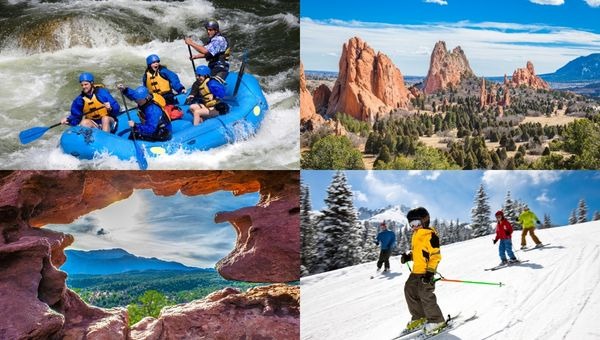
And when you want to actually get into them, the distance is almost embarrassingly short. Echo Mountain and Loveland Ski Area are about an hour from Denver — a realistic after-work option in winter. Breckenridge, Keystone, and Vail are 1.5 to 2 hours away. Rocky Mountain National Park, one of the most visited and most spectacular national parks in the country, is about 90 minutes from downtown Denver and offers more than 300 miles of trails and elevations reaching over 14,000 feet.
For day hikers and weekend adventurers, the options within an hour of the city are almost overwhelming. The foothills communities of Golden and Morrison provide immediate access to some of the best front-range hiking in Colorado. Clear Creek Canyon in Golden offers rock climbing and whitewater rafting minutes from the city. Chatfield State Park, southeast of Denver, has a reservoir popular for paddleboarding, kayaking, and fishing — accessible off I-225 without fighting mountain traffic.
Popular spots within an hour of Denver: Red Rocks Park & Amphitheatre (Morrison), Lookout Mountain (Golden), Green Mountain Park (Lakewood), Mount Falcon Park (Morrison), Chatfield State Park (Littleton), Golden Gate Canyon State Park (Golden).
You Don't Even Have to Leave the City to Get Outside
One of the underappreciated things about the Denver metro is how much outdoor access exists within city limits — before you even factor in the mountains. Denver maintains more than 200 parks and an extensive network of trails that make daily outdoor movement feel effortless rather than aspirational.
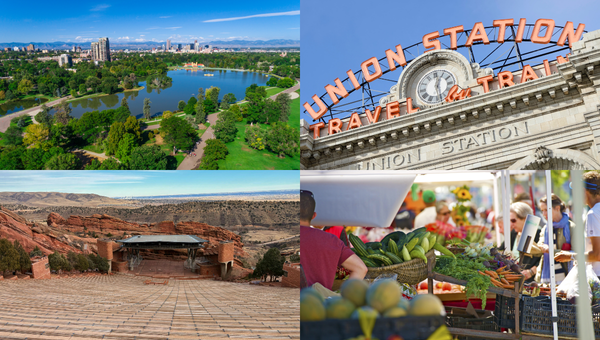
Washington Park — Wash Park to locals — is 165 acres of lakes, paved paths, tennis courts, and open lawns in the heart of the city. On any given morning, it hums with runners, dog walkers, cyclists, and paddleboarders. Sloan's Lake on the west side offers a 2.7-mile loop around a lake with mountain views and a consistently lively, community-oriented energy. City Park, at 330 acres, is home to the Denver Zoo and the Denver Museum of Nature and Science, and its lake is a popular spot for paddleboarding on warm evenings.
The South Platte River Trail winds through the city for miles, connecting neighborhoods, parks, and Confluence Park — where Cherry Creek meets the Platte in a hub of outdoor activity right at the edge of downtown. The Cherry Creek Regional Trail extends 42 miles through the metro, giving cyclists and runners a car-free route that feels more like nature than city infrastructure.
Denver's bike lane network covers close to 200 miles throughout the city, and for many residents, biking to work or to a brewery or to the farmer's market isn't a feat — it's just Tuesday.
Great in-city outdoor spots: Washington Park, Sloan's Lake, City Park, Cherry Creek Regional Trail, South Platte River Trail, Confluence Park, Bear Creek Lake Park (Lakewood).
Red Rocks Amphitheatre Is Worth Moving for on Its Own
This sounds like hyperbole. It is not.
Red Rocks Amphitheatre, about 15 miles west of Denver in Morrison, is a natural open-air concert venue built into 700-million-year-old sandstone formations — and it is, by almost any measure, the most extraordinary place to see live music in the world. Not in Colorado. The world. Artists across every genre compete to play here, and locals treat it like a neighborhood amenity: the thing you casually mention when someone asks what you did last weekend.
Spring through fall, the concert calendar is packed. But even on non-show days, the park is free and open for hiking, yoga classes, and some of the most dramatic scenery accessible to anyone in the metro area. The Trading Post Trail loops through the formations with views that are just as spectacular from ground level as they are from the seats.
For people moving from cities where live music means a cramped indoor venue or an outdoor festival on a flat parking lot, experiencing Red Rocks for the first time is genuinely disorienting. It shouldn't exist this close to a major metro area. And yet here it is, 15 minutes from your front door.
Red Rocks Amphitheatre, 18300 W. Alameda Pkwy, Morrison, CO. Free for hiking and sightseeing year-round. Concert calendar at redrocksonline.com.
Four Seasons, All of Them Good
Denver averages more than 300 days of sunshine per year — more than Miami or San Diego. That number surprises almost everyone who hasn't lived here. The city is cold and snowy in winter, yes, but it's also frequently sunny and mild between storms, in a way that makes Colorado winters feel fundamentally different from those in the Midwest or Northeast.
Winter is ski season, and the Denver metro's proximity to world-class resorts is one of the most compelling lifestyle advantages it offers. Breckenridge, Keystone, Copper Mountain, Vail, and Beaver Creek are all within two hours on I-70 — close enough for day trips, far enough to feel like a real mountain escape. Season passes with Ikon or Epic coverage make regular skiing genuinely affordable for residents in a way it isn't for most of the country.
Fall in Colorado is spectacular in a way that residents talk about with genuine reverence. September and October bring cool nights, golden aspen groves in the mountains, and clear blue skies that photographers travel from around the world to capture. The aspens turn in waves — starting high on the mountain slopes and working down — which means there are several weeks of peak color to chase across different elevations.
Spring is unpredictable: one week it's 70 degrees, the next there's a late snowstorm. Locals treat it as a feature rather than a bug. And summer in Denver is warm and dry, with low humidity that makes even hot days manageable and evenings that almost always cool down enough to sit outside comfortably.
Ski resorts within 2 hours of Denver: Loveland, Arapahoe Basin, Breckenridge, Keystone, Copper Mountain, Vail, Beaver Creek, Winter Park.
The City Itself Is Worth Showing Up For
The outdoor pull is real, but Denver has also quietly become one of the more culturally vibrant mid-sized cities in the country — and that's a big part of why people stay once they arrive.
The Denver Art Museum houses more than 70,000 works and is considered one of the finest art museums in the American West. The Denver Performing Arts Complex is one of the largest performing arts centers in the country, home to the Colorado Symphony, the Colorado Ballet, and multiple theater stages. The Denver Botanic Gardens — with locations in Capitol Hill and at Chatfield Reservoir — draw visitors year-round and offer some of the most beautiful public green space in the city.
Old Town districts like RiNo (River North Art District) are lined with murals, galleries, craft breweries, and restaurants that have made Denver a genuine food-and-culture destination, not just a mountain gateway. The Saturday Farmers Markets — particularly in RiNo and City Park — are community gathering places that draw thousands each week during the growing season.
The city is also genuinely diverse, with a strong community culture around festivals, markets, and neighborhood events throughout the year. Cinco de Mayo in Denver is one of the largest celebrations outside of Mexico. The Great American Beer Festival each October draws tens of thousands to the Colorado Convention Center. Neighborhood block parties, food truck rallies, and free outdoor concert series are part of the weekly summer calendar in most parts of the metro.
The Economy Makes the Lifestyle Possible
All of this is easier to enjoy when the job market is strong, and Denver's is. The metro area's economy is one of the most diversified in the Mountain West, anchored by aerospace, technology, healthcare, financial services, and a growing renewable energy sector. According to the Navigating Denver relocation guide, Denver's unemployment rate has run at approximately 3.4% — meaningfully below the national average — and the metro ranks first among the 50 largest US cities for private aerospace employment per capita.
Major employers include Lockheed Martin, United Launch Alliance, Ball Aerospace, DaVita, Newmont Mining, and a growing number of tech firms that have made the 'Silicon Mountain' corridor — stretching from the Denver Tech Center south to Boulder — a genuine alternative to coastal tech hubs. Several major firms have established secondary headquarters in Denver, drawn by competitive salaries, a highly educated workforce, and operating costs that undercut San Francisco and Seattle significantly.
Remote work has further opened the door for people who want Denver's lifestyle but aren't tied to a Denver employer. The metro consistently ranks among the top destinations for remote worker relocation, and neighborhoods across the Front Range have seen meaningful population growth as a result.
And Yes — The Real Estate Market Has Room for You
The Denver metro housing market has shifted meaningfully from its pandemic-era peak. Inventory has expanded, competition has cooled, and buyers have more choices and more negotiating power than they've had in years. The metro median price has stabilized, and the frantic bidding wars that defined 2021 and 2022 have largely given way to a more balanced environment where buyers can include contingencies, request concessions, and actually think before they sign.
For buyers relocating from California, Seattle, or New York, Denver frequently represents a meaningful step up in purchasing power — more space, more lot, and more of a home than the same budget would buy on the coasts. And the broader Front Range — communities like Castle Rock, Fort Collins, Parker, and Aurora — offers additional options at a range of price points for buyers who want proximity to Denver without paying Denver prices.
The suburbs have also grown into genuine destinations in their own right. Castle Rock has a walkable historic downtown and 130+ miles of trails. Fort Collins has Old Town, a nationally recognized craft beer scene, and 200+ miles of bike infrastructure. Parker has community parks, top-rated schools, and easy I-25 access. The Front Range isn't just Denver with a commute — it's a collection of distinct communities, each with something real to offer.
So What's Keeping You?
The honest answer to why people move to the Denver metro area — and why they never look back — is that it's one of the few places in the country where the lifestyle matches the aspiration. The mountains are actually there. The trails are actually usable on a weekday. The sunshine is actually reliable. The community is actually engaged.
It's not perfect. Traffic on I-25 is real. The altitude takes getting used to. Housing is expensive relative to many parts of the country. These things are worth knowing going in.
But for the people who move here and stay — and there are a lot of them — the tradeoffs are easy. Because what they got in return is a daily life that looks like the one they'd been trying to build somewhere else for years.
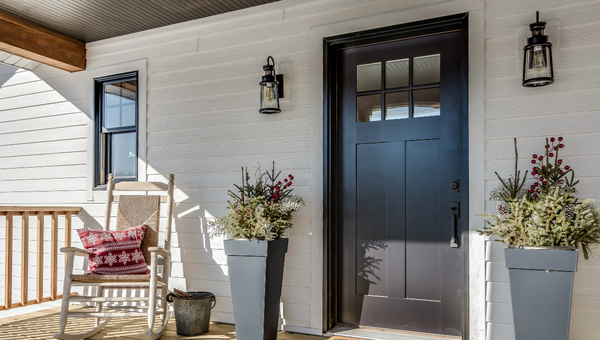
If you're ready to explore what homeownership looks like in Denver or anywhere along the Colorado Front Range, the team at Shift Real Estate is here to help. We know these communities, the market, and what it actually takes to find a home that fits the life you're building.
Reach out anytime. We'd love to help you find your corner of Colorado.
Sources: Navigating Denver Relocation Guide 2026 (navigatingdenver.com) | Usaj Realty, 'Why People Are Still Moving to Denver' (April/July 2026) | North Forty News, 'Who's Actually Moving to Colorado in 2026' (June 2026) | Sweatpals, 'Best Outdoor Activities in Denver 2026' | Colorado Hikes and Hops, 'Hikes Near Denver with Stunning Views' | Visit Denver (visitdenver.com) | Denver Parks & Recreation (denvergov.org) | Red Rocks Amphitheatre (redrocksonline.com) | U.S. Census Bureau metro migration data
Read More