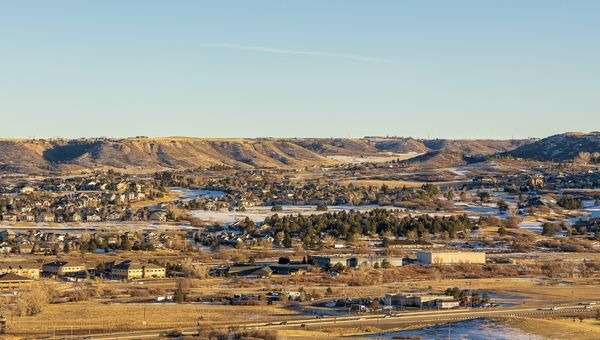
Everything you need to know about Parker
Parker occupies a sweet spot in the Denver metro that's increasingly hard to find: genuine community character, rolling hills and ponderosa pine landscapes, excellent schools, abundant outdoor space, and a location that puts you squarely between two of Colorado's most accessible employment corridors — the Denver Tech Center to the north and Castle Rock to the south.
Situated in Douglas County about 25 miles southeast of downtown Denver, Parker has grown from a small ranching community into one of the most sought-after family destinations on the Front Range. Its population has surpassed 85,000 residents, and between 2020 and 2023 alone, the community grew by 7.2%, according to the U.S. Census Bureau — a pace that reflects genuine demand rather than simply available land. People who move here tend to stay.
Part of the draw is physical. Parker's landscape is distinctly different from the flat suburban sprawl of many Denver-area communities. Rolling hills, mature trees, and wide-open views give many neighborhoods a sense of space and natural character that's rare at this proximity to a major city. Equestrian properties with half-acre, five-, and even ten-acre lots are common, and the Cherry Creek Trail system connects the community to one of the longest multiuse paths in Colorado.
If you're considering a move to the south Denver metro, here's everything you need to know about what life in Parker actually looks like.
Parker at a Glance
• Population: 85,600+ (one of Douglas County's largest communities)
• Location: Douglas County; ~25 miles southeast of downtown Denver, ~20 miles northeast of Castle Rock
• Elevation: ~5,869 feet above sea level
• Average summer high: 86°F | Average annual snowfall: ~70–80 inches
• Median home price (2026): ~$675,000–$700,000 depending on source
• School district: Douglas County School District RE-1 (A- from Niche, 3rd largest in Colorado)
• Median household income: ~$130,640 — significantly above the national median
• Commute to Denver Tech Center: ~13 miles north via I-25 or CO-83
• Commute to downtown Denver: ~26 miles north; ~35–50 minutes depending on traffic
• Access to Denver International Airport: ~26–28 miles via E-470
• Cherry Creek State Park: 4,200 acres with 35+ miles of trail, just north of Parker
The Parker Real Estate Market
Parker's real estate market in 2026 is best characterized as resilient and stabilizing. After the pandemic-era boom pushed prices to record highs, the market has settled into a more balanced rhythm — with median prices holding steady in the $675,000–$700,000 range, well-priced homes still selling quickly, and buyers enjoying more choice and negotiating room than they've had in several years.
According to Homes.com, the median sale price for Parker homes over the past 12 months was approximately $675,000, consistent year-over-year and reflecting the market's underlying strength. Houzeo's 2026 data places the median closer to $700,000, while Zillow's June 2026 Home Value Index put the average Parker home value at approximately $688,000 — down modestly from the prior year but still well above the broader Denver metro median. Redfin data from spring 2026 shows homes selling at a median of $658,000 with an average of just 15 days on market, suggesting that well-positioned listings still move quickly.
One consistent theme across data sources: homes priced accurately for current conditions sell near list price — typically around 98% of asking — while overpriced listings sit. The Parker market rewards preparation and realistic pricing from both buyers and sellers. According to local market analyst Prerna Kapoor, the Parker median has sat around $700,000 through early 2026, which she describes as essentially flat — and characterizes as a healthy stabilization after the dramatic swings of 2020–2023.
The single-family home market is the core of Parker real estate, with the average home exceeding 2,900 square feet — significantly above the national average of 1,933 square feet. That size advantage is one of the things that draws families from higher-cost markets where similar square footage would cost substantially more.
The Parker Real Estate Market
Parker's real estate market in 2026 is best characterized as resilient and stabilizing. After the pandemic-era boom pushed prices to record highs, the market has settled into a more balanced rhythm — with median prices holding steady in the $675,000–$700,000 range, well-priced homes still selling quickly, and buyers enjoying more choice and negotiating room than they've had in several years.
According to Homes.com, the median sale price for Parker homes over the past 12 months was approximately $675,000, consistent year-over-year and reflecting the market's underlying strength. Houzeo's 2026 data places the median closer to $700,000, while Zillow's June 2026 Home Value Index put the average Parker home value at approximately $688,000 — down modestly from the prior year but still well above the broader Denver metro median. Redfin data from spring 2026 shows homes selling at a median of $658,000 with an average of just 15 days on market, suggesting that well-positioned listings still move quickly.
One consistent theme across data sources: homes priced accurately for current conditions sell near list price — typically around 98% of asking — while overpriced listings sit. The Parker market rewards preparation and realistic pricing from both buyers and sellers. According to local market analyst Prerna Kapoor, the Parker median has sat around $700,000 through early 2026, which she describes as essentially flat — and characterizes as a healthy stabilization after the dramatic swings of 2020–2023.
The single-family home market is the core of Parker real estate, with the average home exceeding 2,900 square feet — significantly above the national average of 1,933 square feet. That size advantage is one of the things that draws families from higher-cost markets where similar square footage would cost substantially more.
Housing Styles in Parker
Parker's housing stock spans several distinct eras and styles. The Cottonwood neighborhood, one of the city's oldest residential areas, features ranch homes, split-levels, and tri-levels built primarily from the late 1970s through the mid-1980s, many on larger lots without HOA restrictions — a rarity in Parker and a meaningful financial consideration for some buyers. Moving into the 1990s and 2000s, master-planned communities like Stonegate, Bradbury Ranch, and Challenger Park Estates brought newer Craftsman, new traditional, and colonial-style homes to the market. More recent development has produced contemporary traditional builds with open floor plans, three-car garages, and finished basements throughout the Twenty Mile, Anthology, and Idyllwilde communities. At the luxury end, The Pinery, Pradera, and the Colorado Golf Club enclave offer custom builds on larger lots with mountain views, mature pine landscapes, and a distinctly different feel from the more suburban eastern communities.
Market data sourced from Homes.com Parker Housing Trends (12-month rolling); Zillow Home Value Index June 2026; Houzeo Parker 2026 Housing Market; Redfin Parker Housing Market March 2026; Parker Colorado Home Center 2026 Housing Market Outlook; Prerna Kapoor, Colorado Housing Market 2026 (March 2026).
Parker Neighborhoods: Finding Your Fit
Parker is a community of distinct neighborhoods, each with its own character, price point, and lifestyle. Here's a guide to the major areas:
Old Town Parker
The historic heart of the community and its most walkable area, Old Town is centered on Mainstreet — a five-block stretch of locally owned restaurants, boutiques, galleries, ice cream shops, and breweries in a charming small-town setting that genuinely earns the description. O'Brien Park anchors the district with basketball courts, playgrounds, and the Parker Gazebo, where outdoor concerts and community events are held throughout the year. It's the kind of downtown that makes residents feel like they live somewhere with real character, not just amenities.
Cottonwood
One of Parker's oldest and most established neighborhoods, Cottonwood sits just off Parker Road and offers a mix of older ranch, split-level, and tri-level homes built primarily in the late 1970s through 1980s. Many properties here sit on larger lots, and a notable portion have no HOA — an increasingly uncommon feature in Parker that makes Cottonwood an attractive option for buyers seeking more freedom and lower monthly overhead. The neighborhood is served by Chaparral High School (rated A by Niche and ranked in the Top 40–50 public high schools in Colorado) and is close to the Cherry Creek Trail system and Parker Jordan Centennial Open Space. Prices generally range from $450,000 to $800,000 for single-family homes.
Stonegate
A large planned community just south of Old Town, Stonegate is one of Parker's most family-oriented neighborhoods, with 14 miles of internal trails, multiple parks, community pools, and easy access to downtown Parker and I-25. Homes range from more modest ranch-style properties in the lower $500,000s to larger brick Craftsman and new traditional homes approaching $1.1 million. The neighborhood is served by Chaparral High School and has a strong community events culture, including events at the Stonegate Village Park disc golf course and regular gatherings centered around the commercial stretch on Lincoln Avenue.
The Pinery
Located on the western edge of Parker amid a dense ponderosa pine landscape, The Pinery is one of the most distinctive communities in Douglas County. Homes here sit on larger lots — often a half-acre or more — surrounded by mature trees and rolling terrain that feels genuinely different from any other neighborhood in the metro area. It's a popular destination for buyers who want space, privacy, and proximity to nature without sacrificing Douglas County schools or Denver access. Price points in The Pinery range widely, from the high $600,000s to well over $2 million for larger custom estates.
Stroh Ranch & Twenty Mile
Located in the northwestern part of Parker near the Lone Tree border, Stroh Ranch and the adjacent Twenty Mile area offer a mix of townhomes, condos, and single-family homes at a range of price points. Condos in Stroh Ranch start in the $300,000s, making this one of Parker's more accessible entry points. The area has strong RTD bus connectivity and sits close to the E-470 corridor, making it particularly convenient for commuters heading to the Denver Tech Center or the airport.
Pradera & Colorado Golf Club
Two of Parker's most upscale communities, Pradera and Colorado Golf Club are anchored by their respective golf courses and feature custom and semi-custom homes on generous lots, many backing to open space or fairways. These neighborhoods attract executive-level buyers and those relocating from coastal luxury markets, and consistently see strong appreciation. Homes typically start above $1 million and extend well beyond $3 million for larger estates.
Bradbury Ranch, Challenger Park Estates & Clarke Farms
Three established mid-range neighborhoods in the heart of Parker, these communities offer well-maintained single-family homes built primarily in the 1990s and early 2000s, with good access to schools, parks, and Parker Road. They're popular with families looking for solid value in a community-oriented setting, with prices generally ranging from $500,000 to $800,000 depending on size and condition.
Canterberry Crossing & Anthology
Newer master-planned communities in the eastern and southern parts of Parker, Canterberry Crossing and Anthology offer more recently built homes with open floor plans, three-car garages, and community amenities. Anthology in particular has been a popular choice for buyers wanting new or near-new construction at relatively accessible price points within Parker's overall market.
Outdoor Recreation: Trails, Open Space & Equestrian Life
Parker's outdoor amenities are one of its most compelling selling points — and they go well beyond the standard suburban park system. The community maintains 17 parks, 13 dedicated trail corridors, and significant access to regional open space that gives residents genuine outdoor variety without leaving the area.
Cherry Creek State Park & Trail System
Just north of Parker, Cherry Creek State Park spans 4,200 acres centered on an 880-acre reservoir. It's one of the most popular recreation destinations in the south Denver metro, offering more than 35 miles of mixed-use trail for hiking, cycling, horseback riding, and running. The reservoir supports swimming, paddleboarding, kayaking, fishing, and sailing. The Cherry Creek Regional Trail extends the corridor for miles in both directions, connecting Parker neighborhoods to the park and ultimately all the way to Confluence Park in downtown Denver — 40 miles of connected trail accessible from many Parker front doors.
Equestrian Facilities & Horse-Friendly Properties
Parker is genuinely one of the most horse-friendly communities in the Denver metro area, with dedicated equestrian infrastructure that reflects the community's ranching roots. Salisbury Equestrian Park features a professional outdoor horse arena alongside sports fields. McCabe Meadows offers a direct trail connection to the Cherry Creek Trail. Easements between properties in several neighborhoods allow residents to ride directly from their homes to trail access — an extraordinary feature at this proximity to a major metro area. For buyers with horses or an equestrian lifestyle, Parker offers options that are nearly impossible to find in comparable communities closer to Denver.
Parker Jordan Centennial Open Space
A 450-acre natural area just north of Old Town Parker, the Parker Jordan Centennial Open Space is a popular destination for hiking, wildlife observation, and nature walks. The area includes wetland habitats, native grasslands, and a network of trails that connect to the broader Cherry Creek corridor. It's the kind of large natural space that typically exists only at much greater distance from urban centers — having it within the city limits is a genuine quality-of-life advantage.
Discovery Park & O'Brien Park
Within Old Town Parker, Discovery Park offers a play fountain that opens in summer and an ice trail for skating in winter — a dual-season community gathering space that reflects Parker's investment in year-round recreation. O'Brien Park spans more than 10 acres along Mainstreet with basketball courts, playgrounds, and the Parker Gazebo. The Parker Recreation Center adds indoor amenities including a pool, gymnasium, and childcare services for families who want year-round activity options regardless of weather.
Golf
Parker is surrounded by well-maintained golf courses, including the Black Bear Golf Club and Colorado Golf Club — both public or semi-private options with dramatic Front Range scenery. Pradera Golf Club serves the upscale Pradera community. For serious golfers, Parker's combination of elevation, sunshine, and course variety is a meaningful lifestyle perk.
Arts, Culture & Community Events
Parker has invested meaningfully in arts and culture infrastructure that sets it apart from many communities its size. The Parker Arts Cultural and Events (PACE) Center is the community's primary performing arts venue, hosting professional productions, live performances, and community theater throughout the year. The adjacent Schoolhouse Gallery rotates exhibitions featuring regional artists. Parker Arts also maintains more than 40 permanent sculptures installed throughout the town — a public art program that gives the community a distinctive visual character.
Community events are a central part of Parker's identity. Parker Days, the city's signature annual festival held each June, is approaching its 50th year and features live music, carnival rides, more than 200 vendors, and a community energy that reflects how deeply rooted the event is in Parker's sense of itself. Parker Fall Fest brings a weeklong celebration to downtown each autumn with a hay bale maze, axe throwing, carnival games, and food trucks. The Mayor's Holiday Lighting at O'Brien Park's gazebo is the community's signature winter event.
The Parker Farmers Market runs every Sunday along Mainstreet from Mother's Day through Halloween — more than five months of weekly community gathering around local produce, artisan goods, home products, and food. It's one of those markets that becomes part of residents' weekly rhythms rather than just a destination.
Parker Arts also offers year-round programming beyond performances: art classes and camps for all ages, the Discovery Park Free Summer Concert Series, a Honey Festival, Science Night events, and educational programs for middle and high school students including a Portfolio Day and Shakespeare Festival.
Parker Weather: What to Expect
Parker experiences a semi-arid Front Range climate with warm summers and genuine winters. Average summer highs run around 86°F — warm but manageable due to Colorado's characteristically low humidity. The city averages 300+ days of sunshine annually, which makes even winter feel less relentless than it does in cloudier climates.
Snow is a real factor in Parker. The community averages 70–80 inches of snowfall per year according to National Weather Service data — notably more than Denver proper, due in part to its slightly higher elevation and position on the eastern edge of the foothills. Snow removal is generally efficient, and the dry Colorado climate means accumulation typically melts faster than it does in wetter regions. For buyers who want to enjoy Colorado winters, Parker's snowfall is actually a selling point — closer to the ski resort feel than the city.
The altitude at just under 6,000 feet is real. Newcomers from sea-level locations should expect a short adjustment period of a few days to a week or two, with symptoms that typically include mild headaches and fatigue. Staying well-hydrated from day one helps significantly.
Shopping, Dining & Everyday Convenience
Parker is well-stocked for everyday living. South Parker Road runs through the city's center lined with shopping centers, national chains, and local businesses. Major grocers include Trader Joe's, Costco, Safeway, and Whole Foods, which joined the Parker retail lineup in August 2024. The Mainstreet Old Town district adds a genuinely local dimension — independent restaurants, coffee shops, breweries like Downhill Brewing, ice cream shops, and boutiques that give the community a character beyond the standard suburban retail experience.
The Arapahoe Crossings shopping center about four miles north on Parker Road adds additional retail and dining options. And for larger shopping or entertainment needs, the Lincoln Crossing corridor in Lone Tree — with its theater, restaurants, and retail — is a short drive west.
For dining, Parker has developed a solid local restaurant scene. The Mainstreet area has enough variety that residents rarely feel the need to drive to Denver for a good meal, and new concepts continue to open as the community's population and income levels support ongoing retail development.
Cost of Living in Parker
Parker sits at the higher end of the Denver metro cost spectrum, driven primarily by housing. With median home prices in the $675,000–$700,000 range and a community median household income of approximately $130,640 — well above both the national median of $79,597 and the broader Denver metro average — Parker is a market that reflects its desirability. Most households here are dual-income professional families, and that demographic shapes both price expectations and the continued investment in community amenities.
That said, Parker offers genuine value relative to comparable communities in other high-cost metros. Buyers relocating from California, the Pacific Northwest, or the Northeast frequently find that their budget buys substantially more home here — in terms of square footage, lot size, school quality, and community amenities — than it would in comparable markets elsewhere.
Everyday costs for groceries, dining, and utilities are generally in line with national norms, and Colorado's flat 4.4% income tax rate and favorable property tax structure compared to many coastal states contribute to the overall value equation.
Most Parker subdivisions carry HOA fees ranging from approximately $100 to $750 per month, depending on the community and its amenities. This is worth factoring into monthly budget calculations, particularly in newer planned communities with pools, trails, and maintained common areas.
Things to Know Before You Move
• HOA fees are the norm. Most Parker communities have them. Research the specific HOA rules, fees, and financial health of any community you're considering before you commit.
• The commute to downtown Denver is real. At 26 miles, Parker is manageable for hybrid commuters but demanding for daily office workers. Test the drive at your actual commute time before deciding on a neighborhood.
• E-470 is a toll road but worth it. For airport runs and avoiding I-25 congestion, E-470 is the locals' preferred route. Budget for tolls if you'll use it regularly — most Parker residents do.
• The equestrian community is genuine, not decorative. If horses are part of your life, Parker may be the best suburban option in the entire Denver metro. The infrastructure, easements, and community culture around equestrian living are real.
• Snow is heavier here than in Denver. Plan for it. Keep your driveway clear, invest in good tires, and enjoy it — Parker's snowfall is part of what makes the landscape beautiful.
• Crime rates have seen increases. The Parker Police Department reported property crime up over 41% and violent crime up nearly 65% between 2019 and 2023, though both remain below statewide per-capita averages for the same period. The department actively runs community programs including Scout Nights and neighborhood watch initiatives. Research specific neighborhoods and stay connected with community resources.
• Douglas County open enrollment gives your kids options. Don't assume the school closest to your home is your only choice — the district's open enrollment means you can apply for a seat at any district school. Worth researching before you choose a neighborhood.
• Parker is growing south and east. If you're buying in or near newer development areas, research what's planned for surrounding parcels so growth patterns don't catch you off guard.
Ready to Find Your Home in Parker?
Parker has earned its reputation as one of the most desirable family communities in the Denver metro area — and it's not hard to understand why. The combination of a genuine small-town downtown, Douglas County's consistently strong schools, abundant outdoor access, and the rare availability of properties with real space and land creates something that's genuinely hard to replicate closer to the city.
Whether you're drawn by the schools, the equestrian lifestyle, the trails, or simply the quality of life that Parker delivers at this price point relative to the coasts, the community tends to exceed expectations for buyers who take the time to explore it properly.
If you're thinking about a move to Parker or anywhere across the Colorado Front Range, the team at Shift Real Estate is here to help. We know the neighborhoods, the nuances between communities, and what it takes to find the right home in this market.
Reach out today to start your Parker home search.
Sources: Homes.com Parker City Guide and Housing Trends | Zillow Home Value Index June 2026 | Houzeo Parker 2026 Housing Market | Redfin Parker Housing Market March 2026 | Parker Colorado Home Center, 2026 Housing Market Outlook | Prerna Kapoor, Colorado Housing Market 2026 (March 2026) | U.S. Census Bureau population and income data | Parker Police Department crime statistics | Douglas County 2024 Economic Development Report | National Weather Service snowfall data | Local Logic bikeability and walkability data via Homes.com
Shift Real Estate Listings

© 2026 Shift Real Estate
DMCA Notice | Terms & Services | Privacy Policy | Accessibility Statement
EQUAL HOUSING OPPORTUNITY



Shift Real Estate
PO Box 2015, Castle Rock, CO 80104
Mobile: 303-587-0312
diane@shift.realestate