What Actually Adds Value to Your Home Before You Sell?(And What's a Waste of Money)
Every seller wants the same thing: list for more, sell faster, and walk away with as much money as possible. And almost every seller asks the same question somewhere along the way — "Should I fix this before I list?"
The honest answer? It depends. Not every dollar you put into your home before selling comes back to you at closing. Some upgrades are worth every penny. Others are the kind of thing that feels productive but quietly drains your proceeds before you ever hit the market.
After years of working with sellers across the Colorado Front Range, the team at Shift Real Estate has seen both. Here's what the data — and real-world experience — actually says.
The Golden Rule of Pre-Sale Improvements
Before we get into specifics, one principle should guide every decision you make: you are not renovating for yourself. You're renovating for a buyer you've never met, in a market that may or may not reward what you spend.
That means asking a different question than most sellers do. Instead of "will this make my home look nicer?", ask: "Will a buyer pay more for this than it costs me to do it?"
Industry research consistently shows that sellers should budget 1–3% of their home's value for pre-sale improvements, with a hard ceiling of around 30% of current home value. For a $600,000 Colorado home, that's roughly $6,000–$18,000 — not $80,000 in kitchen renovations.
Quick math: A $600K home. You spend $8,000 wisely on paint, curb appeal, and a few targeted updates. You sell for $20,000 more than comparable homes. That's a 2.5x return. Spend $45,000 on a full kitchen remodel? You'll likely recover $25,000–$30,000. You've effectively paid $15,000–$20,000 to help the next owner enjoy a new kitchen.
What Actually Adds Value (Worth the Money)
1. Garage Door Replacement
This one surprises a lot of sellers — but it's been the #1 ROI home improvement in national cost-vs-value reports for two years running. A garage door replacement costs roughly $4,300–$4,700 and adds an estimated $8,300–$12,500 in resale value, producing ROI of 190–268% depending on the market. Why? Because it's one of the first things buyers see, it signals "this home is well-maintained," and it's relatively inexpensive for the visual impact it delivers. If your garage door is dented, dated, or just tired-looking, replace it. (Source: HomeCostLab Cost vs. Value Report 2026; Premier Plus Lending 2026)
2. Fresh Paint in Neutral Colors
Interior paint is the single highest-impact, lowest-cost improvement most sellers can make. A full interior repaint typically costs $1,000–$3,000 for a mid-size home and delivers an ROI of around 107%. That's not just about covering scuffs — it's about giving buyers a clean, move-in-ready canvas. The key word is neutral. Your bold accent wall may be a conversation piece you love; to a buyer, it's a weekend project they're already dreading. Stick to warm whites, soft greiges, and light warm tones. (Source: Opendoor 2026)
3. Curb Appeal Basics
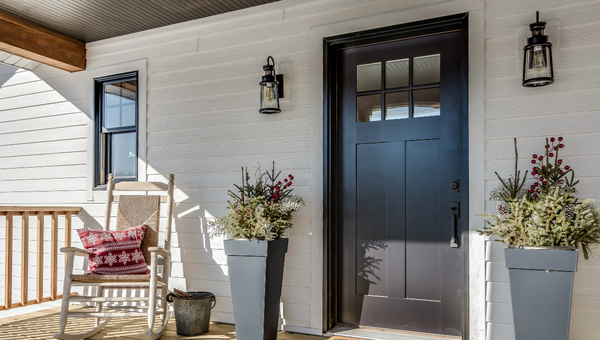
According to the National Association of Realtors, 97% of real estate agents say curb appeal matters to buyers. And it doesn't take much to make a meaningful difference: fresh mulch, trimmed hedges, a power-washed driveway, seasonal flowers at the front door, and a freshly painted front door can be done for $200–$800 and transform how your home photographs and how buyers feel when they pull up. First impressions aren't just emotional — they set the price anchor in a buyer's mind before they ever walk inside.
4. Deep Cleaning and Decluttering
This is not glamorous advice, but it may be the highest-return thing on this list. A professional deep clean costs $150–$250 and signals to buyers that this home has been cared for. Decluttering — removing personal items, clearing countertops, thinning out closets — makes spaces feel larger and helps buyers see themselves living there instead of feeling like they're walking through someone else's home. If you do nothing else before listing, do this.
5. Minor Kitchen Refresh (Not a Full Remodel — More on That Below)
There's a big difference between refreshing a kitchen and remodeling it. A refresh — new cabinet hardware, fresh paint on cabinets, a new faucet, updated light fixture — can cost $500–$3,000 and deliver strong returns because the kitchen is the room buyers spend the most mental energy evaluating. A full remodel is a different story entirely (see below). If your kitchen is functional and reasonably clean, a refresh is almost always the smarter move.
6. Front Door Replacement
A steel entry door replacement delivers an average ROI of over 200% — second only to garage doors in national rankings. A quality new front door costs $2,000–$3,500 and dramatically improves both curb appeal and the perceived quality of the home. If your front door is scratched, faded, or just feels cheap, this is a high-leverage swap.
7. Manufactured Stone Veneer
Adding stone veneer to the front exterior — even just as an accent — delivers roughly 150–208% ROI nationally. It's a relatively affordable exterior upgrade ($10,000–$11,000) that dramatically elevates a home's curb appeal and perceived value. In competitive Colorado markets where buyers compare listings online first, exterior photos are everything.
8. Staging
Professional staging costs $1,500–$4,000 for the main living areas, and research consistently shows staged homes sell faster and for more money than comparable unstaged homes. Staging isn't about putting new furniture in — it's about helping buyers emotionally connect with the space by making it feel aspirational but livable. In a market where most buyers see your home online first, staged photos are the difference between a showing and a scroll-past.
What's a Waste of Money (Skip These)
Full Kitchen or Bathroom Remodels
This is the one sellers get wrong most often. A full kitchen remodel costs $27,000–$40,000+. The average resale recovery? Around 50–75% — meaning you spend $40,000 and get back $20,000–$30,000 at closing. You are paying out of pocket to give the next owner a new kitchen. The same math applies to full bathroom remodels. Unless your kitchen or bathroom is truly non-functional or a deterrent to showings, a refresh (new hardware, paint, fixtures) is almost always the smarter play. As one real estate principle puts it: "Buyers want a canvas, not someone else's vision." (Source: Opendoor 2026)
Swimming Pools
In some markets and climates, a pool can add value. In Colorado, it's complicated. Our shoulder seasons are long, the maintenance costs are real, and a significant portion of buyers actively don't want a pool — especially families with young children or buyers who travel frequently. Adding a pool before selling is rarely a smart financial move, and in many cases it narrows your buyer pool rather than expanding it.
Room Additions and Sunrooms
Major additions almost never recoup their costs at resale. A sunroom addition, for example, might cost $40,000 and return $20,000 — a 50% loss. These projects take months, introduce permit complications, and ultimately reflect your preferences more than the market's. Unless you're doing it for your own enjoyment while you're still in the home, skip it.
High-End Upgrades in Average-Price Neighborhoods
The market has a ceiling in every neighborhood, and no amount of renovation can push your home past it. Installing imported marble countertops, a commercial-grade range, or custom millwork in a $350,000 neighborhood will not make your home sell for $500,000. Buyers in that price range have a different expectation set. Over-improving for your market is one of the most common and costly mistakes sellers make.
Partial Renovations
"A partial remodel never looks good." If you replace one bathroom vanity but leave the 1980s flooring, buyers don't see an improvement — they see a mismatch. If you're going to update a space, either do it fully or don't do it at all. A half-finished project signals neglect more than care.
Replacing a Functional Roof
If your roof is functional and not at the end of its life, you don't need to replace it before selling. Buyers and inspectors will note the age, but a functional older roof is not typically a deal-breaker — and a full replacement can cost $15,000–$30,000 that you may not fully recover. A better approach: get it inspected, document that it's in good working order, and disclose its age transparently. If there are active leaks or significant damage, that's a different conversation.
Outdated Window Treatments
Simply remove them. Old blinds, heavy drapes, and dated curtain rods don't need to be replaced — bare windows often show better in photos, let in more light, and feel cleaner to buyers. Save yourself $500–$1,500 and just take them down.
The Real Question to Ask Before You Spend Anything
Before you write any check for pre-sale improvements, ask your real estate agent this: "Will a buyer in this market pay more for this than it costs me to do it?"
A good agent knows what buyers in your specific neighborhood are prioritizing right now. They've seen which homes are sitting and which are getting multiple offers. They know what the inspection reports are flagging most often. That context is worth more than any national statistic — because real estate is always local.
Real example: A seller in the Denver metro spent $3,200 total — $1,800 on paint, $200 on hardware, $450 on landscaping, $750 on professional cleaning. Their home received three offers within 10 days and sold $12,000 above asking price. That's nearly a 4x return. No renovation required.
When It Makes Sense to Sell As-Is
Sometimes the smartest move is to list your home exactly as it is — and let the market price it accordingly. Selling as-is often makes sense when:
• Your home needs $50,000 or more in work and you don't want to manage a renovation project
• You're on a tight timeline — estate sale, job relocation, or life change
• The local market is competitive and inventory is low (buyers will overlook condition when options are scarce)
• The cost of improvements clearly exceeds what you'd recover at closing
An experienced agent can help you run the numbers honestly and make the call that actually serves your financial goals — not just the one that feels like the most "responsible" thing to do.
Thinking About Selling in Colorado? Let's Talk.
The Shift Real Estate team works with sellers across the Denver metro, Colorado Springs, Boulder, and surrounding communities. Before you spend a single dollar on pre-sale improvements, let's walk through your home together and tell you exactly what matters in your specific market right now.
The goal is simple: help you sell for more, stress less, and keep more of what you've earned.
Contact Shift Real Estate today to schedule a no-pressure seller consultation.
Sources: HomeCostLab 2026 Cost vs. Value Report | Premier Plus Lending — Top Home Projects for ROI 2026 | Opendoor — Home Improvements Before Selling 2026 | HomeLight — What Not to Fix When Selling a House | National Association of Realtors — Remodeling Impact Report
Shift Real Estate Listings

© 2026 Shift Real Estate
DMCA Notice | Terms & Services | Privacy Policy | Accessibility Statement
EQUAL HOUSING OPPORTUNITY



Shift Real Estate
PO Box 2015, Castle Rock, CO 80104
Mobile: 303-587-0312
diane@shift.realestate